Fishing guide · Northern Patagonia
Fly Fishing in Futaleufú, Chile
Rainbows and browns in turquoise water: season dates, licensing, regulations and gear for fly fishing Chilean Patagonia.
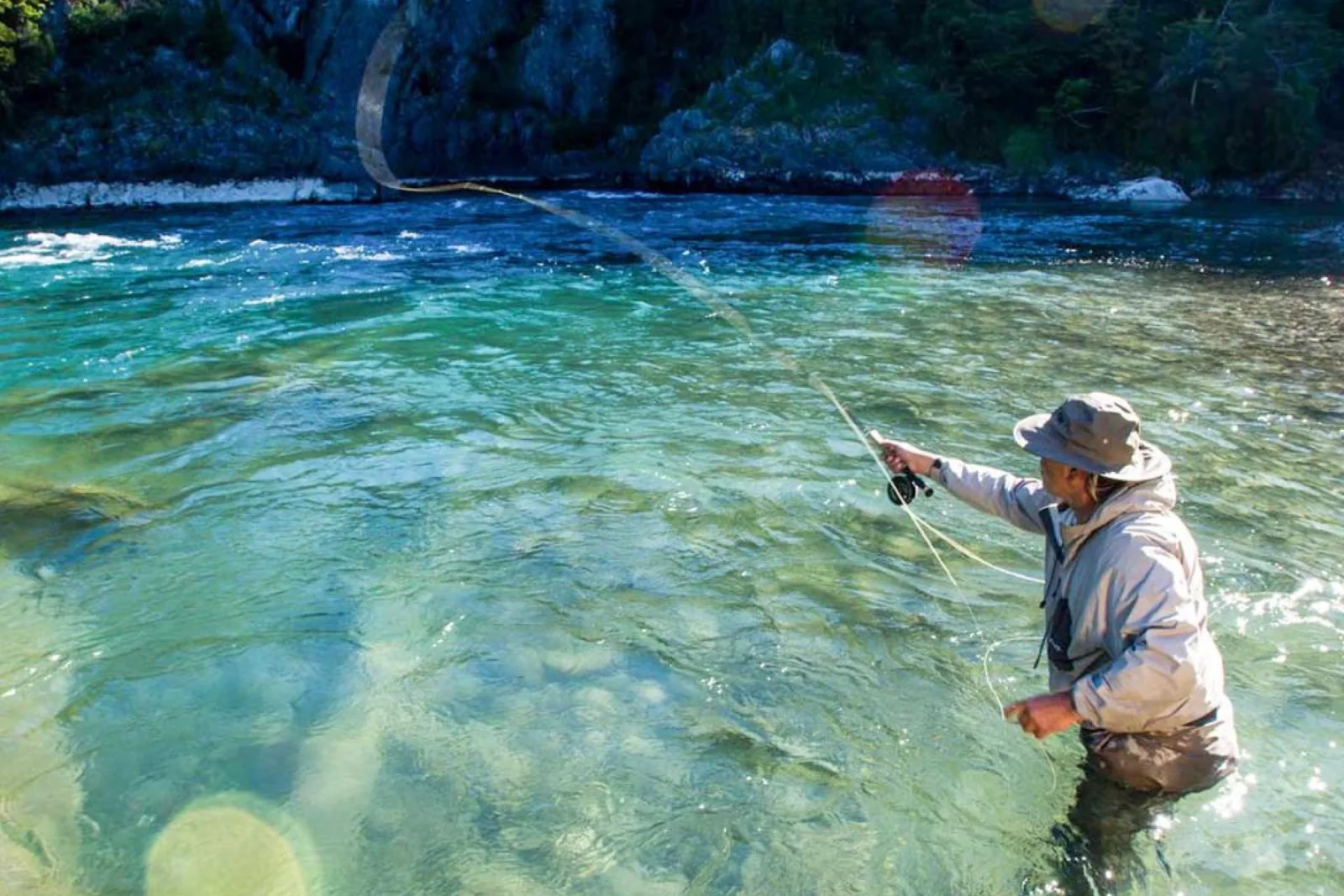
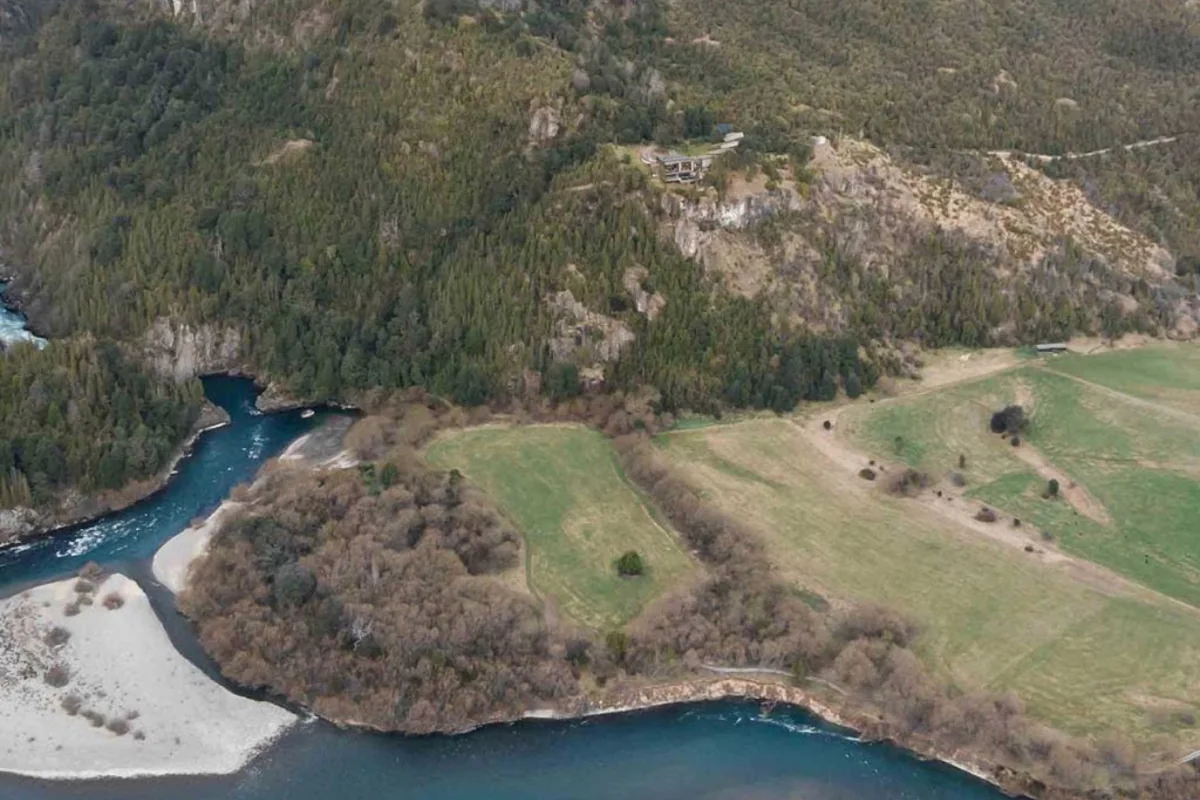
Futaleufú is famous for whitewater, but fly anglers know it for something else: a big, cold, turquoise river coming down out of the Andes with wild rainbows and browns, surrounded by smaller rivers and lakes just a few miles away. This guide covers what you need to plan a trip: where to fish, what species to expect, the season and the regulations for Palena Province, how to buy a Chilean fishing license online, which flies and gear to pack, and how to combine fishing with the rest of the valley from Uman Lodge, set above the confluence of the Espolón and Futaleufú rivers.
Season dates, regulations and license fees were checked against official sources in October 2026.
- 2026–27 season in Futaleufú
- Nov 1 – May 2
- Foreign angler license, one week
- CLP 19,900
- Trout released
- 100%
- Uman Lodge open
- Nov 7 – Mar 31
The river
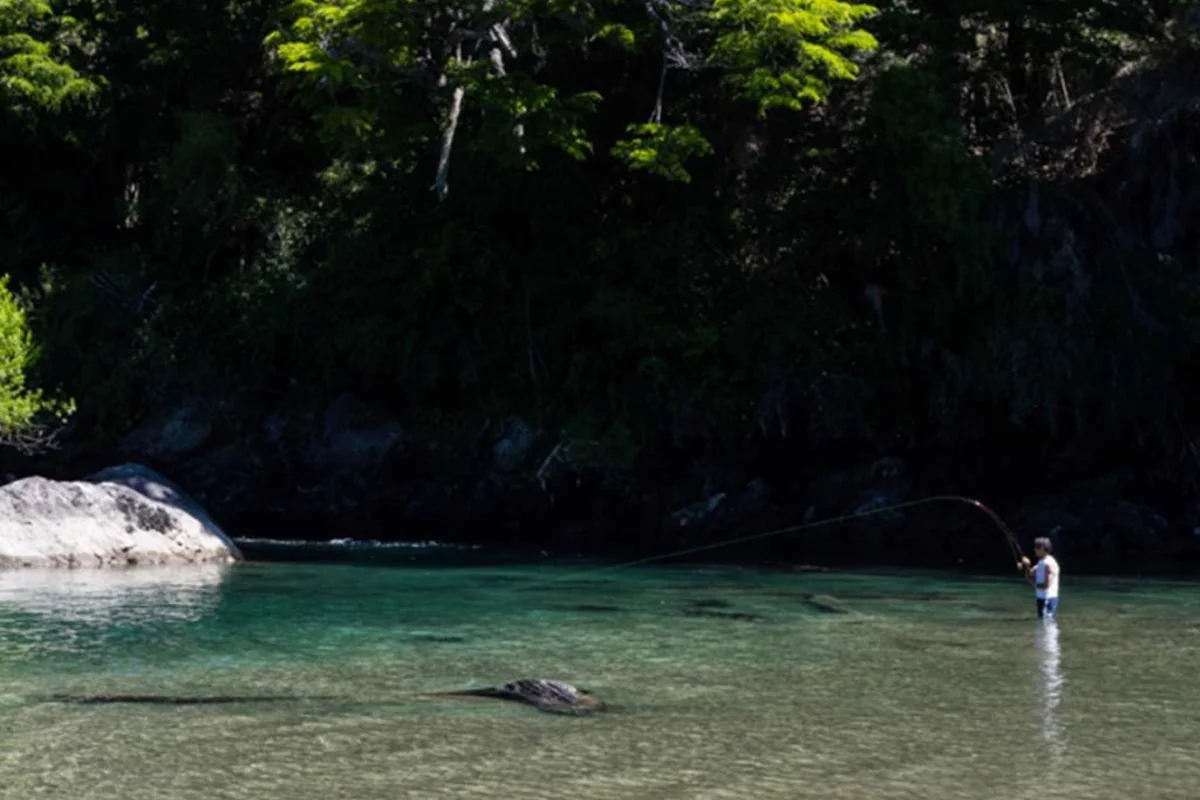
The Futaleufú, a trout river
The Futaleufú is a binational river. It rises in the lakes of Los Alerces National Park in Chubut, Argentina, where it is called the Río Grande, crosses into Chile near the Futaleufú border pass and runs west to Lake Yelcho. Upstream in Argentina it is regulated by the Futaleufú hydroelectric dam, in service since 1978. Local guides say those lakes and the dam give the river steadier flows and cold, clear water all season, which is unusual for a snowmelt river.
Between the border and the lake, anglers usually talk about three sections:
- The upper river, from the border. Cobble bottom, riffles and deep cobalt pools, with wide gravel banks for wading. The Espolón, its main tributary here, comes in right below Uman Lodge.
- The middle river. Slightly slower water, less room to wade and more shelter from the wind. Local guides rate it for sight-fishing with dries.
- The lower river, down to Lake Yelcho. About 15 km (9 miles) of bigger water, side channels and banks lined with logs, willows and arrayán. Fewer fish than upstream, but larger ones: this is where lake-run trout come in.
Wind comes with the territory. In the mountains it builds in the afternoon, usually after 4 p.m., so plan your technical fishing for early morning or the evening.
What you'll catch
Species: rainbows, browns, brook trout and chinook
None of Patagonia's trout are native. Rainbows and browns arrived in South America more than a century ago and went wild in almost every watershed. The Futaleufú–Yelcho system holds four salmonids:
| Species | Scientific name | In Futaleufú |
|---|---|---|
| Rainbow trout | Oncorhynchus mykiss | The most common fish in the riffles; jumps hard. |
| Brown trout | Salmo trutta | Holds in pools and along structured banks; big lake-run browns push up from Yelcho late in the season. |
| Brook trout | Salvelinus fontinalis | Scarce; turns up in the lower river and in ponds whose creeks drain into it. |
| Chinook (king) salmon | Oncorhynchus tshawytscha | Naturalized: there is an established run in the Futaleufú and juveniles in Lake Yelcho. |
Chinook came with salmon farming. A 2015 genetic study (Di Prinzio et al.) traces the Futaleufú population to ocean-ranching stock imported in the 1970s and 1980s, later reinforced by net-pen escapes. Another study (Ibarra et al., 2011) found juveniles over a year old in Lake Yelcho, feeding on native fish. It is an invasive species, and the rules allow you to keep one a day, except on the upper Futaleufú.
Native fish share the same water, including puyes (galaxiids) and the Patagonian perch. If one takes your fly, the rule is the same as for trout: release it.
Rivers and lakes
Where to fish from Futaleufú
Within an hour's drive of town you have a big river, a mountain river and several lakes. Distances are approximate, by Route 231-CH and valley roads.
| Water | Distance from Futaleufú | What to expect |
|---|---|---|
| Upper Futaleufú | Next to town and to Uman Lodge | Riffles and pools; fished from a boat and on foot. Mandatory release of all salmonids. |
| Espolón River | Joins the Futaleufú by Uman Lodge | Smaller river flowing out of Lake Espolón; rainbows and browns in pools and riffles. |
| Lake Espolón | ~7–8 km / 5 miles (km 41 on Route 231) | Forest-lined mountain lake; fish it from a boat or the bank. |
| Lake Lonconao | ~10 km / 6 miles toward Chaitén | The only lake in the valley fed by groundwater rather than glaciers. Browns and rainbows. |
| Lower Futaleufú and Lake Yelcho | ~48 km / 30 miles to Puerto Ramírez | The river empties into Lake Yelcho; big trout at the inlet and along the reed beds. |
| Palena River | ~90 km / 56 miles (via Puerto Ramírez) | A big trout river on the Los Lagos–Aysén border, with rainbows and chinook. |
Yelcho River. It drains the lake to the sea near Chaitén and is reachable from the Carretera Austral. If you are driving that way, see our Carretera Austral guide [VERIFY: species and public access on the Yelcho River for 2026–27].
The rules
Fishing season and regulations in Futaleufú
Chile's general freshwater salmonid season is set by Decree 320 of 1981: from the second Friday in November to the first Sunday in May. In the Los Lagos Region that means November 13, 2026 to May 2, 2027. Palena Province, which includes Futaleufú, Lake Yelcho and the Palena, has its own rules. Exempt Resolution 2,428 of 2025, in force through the 2028–29 season, opens fishing on November 1 and closes it on the first Sunday in May. For 2026–27, that is November 1, 2026 to May 2, 2027.
Conditions across Palena Province:
- Artificial lures only, with a single barbless hook. Flies count as artificial lures.
- Trout are always released. Each angler may keep one salmon a day (Atlantic, coho or chinook). Everything else, trout and native fish included, goes back.
- Full catch and release on the upper Futaleufú. From the border down to the Sofía sector, every salmonid must be released, chinook included. Based on the coordinates in the resolution, the water below Uman Lodge falls inside that zone.
- No night fishing from 10 p.m. to 6 a.m., and no fishing from bridges.
- No gaffs, hooks or grippers to hold fish, no gutting fish on the bank and no litter.
- Fish that die are still returned to the water, so other wildlife can use them.
Didymo. In 2010 Didymosphenia geminata ("rock snot") was found in the Futaleufú and Espolón, and Chile's fisheries undersecretariat declared both rivers a pest area. To avoid spreading it, follow Sernapesca's protocol: strip any algae off your gear before you leave the water; soak boots, waders and lines for one to two minutes in water with dish soap (500 ml per 10 liters, about 2 cups per 2.5 gallons); then let everything dry for at least 48 hours before fishing another watershed. Leave felt-soled boots at home.
Before you go
Chile fishing license for foreign anglers
Everyone who fishes in Chile needs a recreational fishing license from Sernapesca, the national fisheries service (Law 20,256), and that includes visitors. It is personal and non-transferable, and you must carry it with your passport. Showing it on your phone is fine.
How to buy it online:
- Go to pescarecreativa.sernapesca.cl and create an account. Foreign visitors register with a passport.
- Choose the duration and type of water, then add the license to the cart.
- Pay online through Chile's General Treasury (Tesorería General de la República).
- The license is emailed to you right away. Save it on your phone and, ideally, print a copy.
2026 fees for non-resident foreigners (valid in both salt and fresh water):
| Duration | Unidades de fomento | 2026 fee |
|---|---|---|
| One week | 0.5 UF | CLP 19,900 |
| One month | 1 UF | CLP 39,800 |
| One year | 1.5 UF | CLP 59,600 |
Fees are reset every year from the value of the UF (an inflation-indexed unit) on December 31, so if you fish in January or February 2027 you will pay slightly more than the 2026 rates. Residents of Chile pay less, and Chileans and residents under 12, over 65 or on the National Disability Registry are exempt. Foreign visitors have no exemptions.
At Uman Lodge, the license is not included in the fishing trip: each angler buys their own before heading out on the river.
The season
When to fly fish Futaleufú: month by month
In Futaleufú the season runs from November into early May, and Uman Lodge is open from November 7 to March 31, which covers the heart of it. Each month has its own character. The table is a rough guide based on reports from local guides; every season shifts it a little.
| Month | Water | What trout eat | How to fish it |
|---|---|---|---|
| November | Tributaries and lakes running with snowmelt; the Futaleufú steadier thanks to the dam. | Stonefly and mayfly nymphs; small baitfish. | Streamers and nymphs on a sink-tip. First dries on warm days. |
| December | Dropping and clearing. | Caddis and mayfly hatches get going. | Nymphs, plus dries in the afternoon; streamers along structured banks. |
| January | Summer flows, very clear water. | Evening caddis, mayflies, midges, dragonflies; beetles by month's end. | Prime dry-fly time. Sight-fishing on the middle river. |
| February | Low and clear, the warmest water of the year. | Terrestrials: hoppers and beetles; evening caddis. | Big foam dries tight to the bank, hopper-dropper rigs. |
| March | Low, with cold mornings. | Fewer hatches; big browns gearing up to spawn. | Streamers for big browns; dries around midday. |
| April and early May | First fall rains. | Baitfish; eggs in the drift. | Streamers on the lower river as browns run up from Yelcho. The lodge is closed by then. |
What "high water" means. After heavy rain or at peak snowmelt the tributaries rise and color up, and visibility drops. In high water you fish the edges and soft seams with streamers and heavy nymphs, and wading is limited or off the table. Late summer brings low, clear water and warier fish: go finer on tippet and keep your presentations clean. That is why it pays to let your guide pick the section to suit the day's flows.
The cantaria. On some rivers in southern Chile, in late January and February, a big beetle drops out of the trees and trout gorge on it. This is the "cantaria hatch", fished with black foam patterns in size 6 [VERIFY with the guide: whether the cantaria shows up in the Futaleufú valley, and in which weeks].
The best time to go depends on what you are after: for dry flies and the most settled weather, mid-January through late February; for streamers and big fish, November and March.
Techniques
How it's fished: drift boats, wading and flies
From a drift boat or raft. The Futaleufú is big, powerful water, and the most complete way to fish it is floating. The guide rows and positions the boat while you work the banks, drop-offs and current seams. You cover miles of water you could never reach on foot, and step out to wade the best runs. Uman's trips enter the Futaleufú upriver by boat [CONFIRM: type of boat, anglers per boat and which sections are floated].
Wading. The upper river, the Espolón and the lake shores all have gravel bars to wade. Use a wading staff, move sideways to the current and stay out of fast water above your knees: the Futaleufú is strong even along its edges [CONFIRM: whether the trip includes wading as well as fishing from the boat].
Flies that work in the valley:
- Dries: Elk Hair Caddis or X-Caddis #12–16, Parachute Adams #12–18, Stimulators #8–12, and big foam bugs (Chubby Chernobyl, Fat Albert) for terrestrials.
- Nymphs: tungsten-bead Pheasant Tails and Hare's Ears #12–16, stonefly nymphs #6–10. Late in the season, egg patterns.
- Streamers: black or olive Woolly Buggers, Matukas and baitfish patterns #2–8. On the lower river, try crab patterns imitating the pancora, a freshwater crab the trout hunt near the lake.
Every fly must be on a single barbless hook: pinch the barb down before you tie it on.
Checklist
Gear: what to pack for Futaleufú
The Futaleufú calls for a bit more rod than a mountain creek: there is current, afternoon wind and fish that run for the heavy water. A starting list:
- 9-ft 5- or 6-weight for dries and nymphs.
- 9-ft 7-weight for streamers, wind and high water.
- Weight-forward floating line, plus a sink-tip or intermediate line.
- 9-ft leaders, 3X–5X, and 3X–5X fluorocarbon tippet.
- Boxes of dries, nymphs and streamers (see above), all on barbless hooks.
- Breathable waders and rubber-soled wading boots: no felt.
- Waterproof wading jacket and warm layers; mornings are cold even in summer.
- Polarized sunglasses, a cap, sunscreen and a buff: the Patagonian sun burns.
- Forceps, nippers and a rubber net (Chilean rules cap nets at 100 cm, about 39 inches, long).
- A dry bag for the boat and a didymo cleaning kit.
- Your Sernapesca license and passport, on your phone or printed.
Waders or wet wading? The Futaleufú runs cold all summer. In January and February, on sunny days, some anglers wet-wade the Espolón or the lakes in quick-dry pants and boots, but for the Futaleufú and long hours in the boat, waders are still the comfortable choice.
Rentals at Uman Lodge. Fishing gear is not included in the trip but can be rented: rod, reel, flies, waders and boots [CONFIRM: rental prices, brands and the wader and boot sizes available].
Good practice
Ethics: catch and release done right
In Futaleufú the trout always go back, so what matters is how. A few rules:
- Keep the fight short. Fish a tippet that lets you land the fish quickly, without wearing it out.
- Wet hands, fish in the water. Back the fly out with forceps while the trout stays submerged. For a photo, lift it for a few seconds and put it straight back.
- Use a rubber net, which spares scales and fins.
- Release it facing upstream, and let it swim off on its own.
- Mind the redds. Late in the season browns prepare to spawn: stay off patches of clean gravel.
- Leave no trace. Pack out trash, used tippet and food scraps, and follow the didymo protocol.
From the lodge
Fly fishing with Uman Lodge
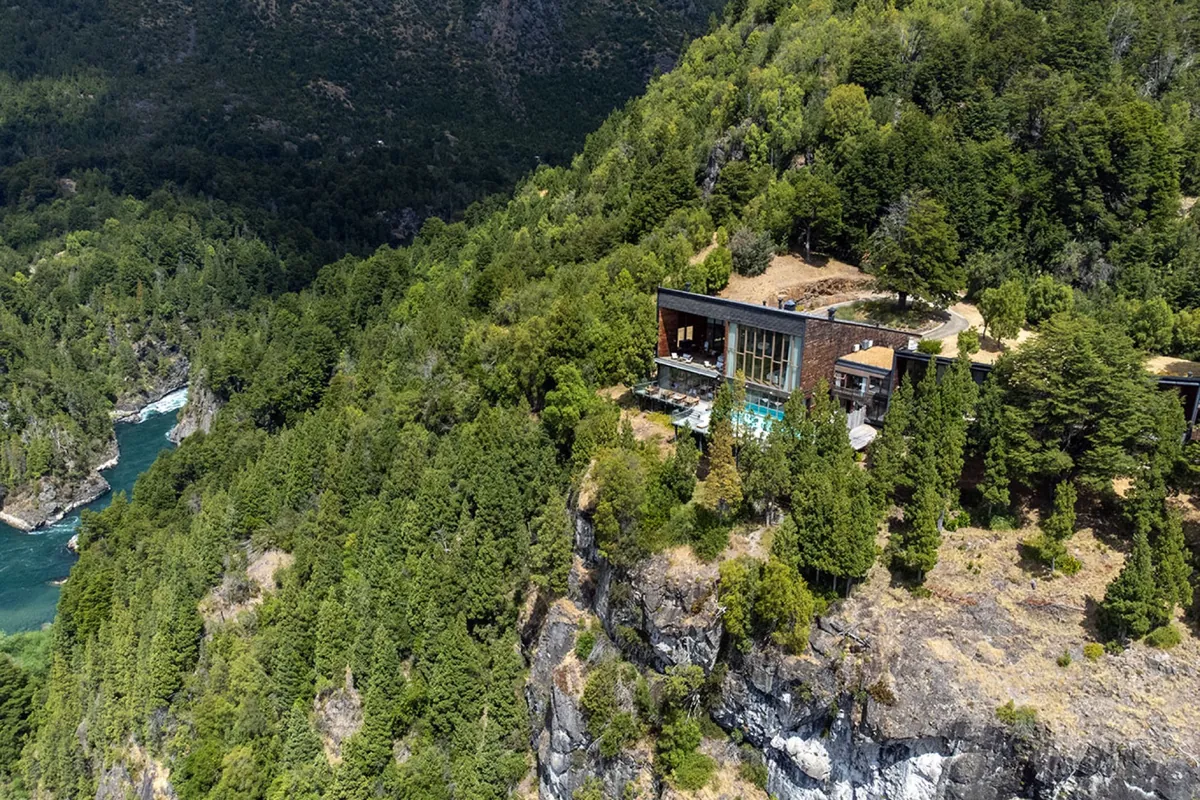
Uman Lodge sits on a cliff above the confluence of the Espolón and Futaleufú rivers, within the 490-hectare (1,210-acre) Fundo La Confluencia. The river runs at the foot of the cliff. Fishing is arranged through the lodge, like the rest of our excursions, with two options:
- Half day (4 hours). A taste of the river without giving it the whole day.
- Full day (8 hours). Fish from early on, with a riverside lunch and the option of staying out until evening.
Both enter the Futaleufú upriver by boat with an expert guide, targeting rainbow and brown trout.
- Included: guide, boat, logistics and transportation, and accident insurance.
- Not included: fishing gear (rod, reel, flies, waders and boots), which can be rented.
- Minimum age: 16. Some prior fishing experience is preferred.
- Lodge season: November 7 to March 31.
[CONFIRM: names and background of the guides, sections fished, type of boat, anglers per boat, start time, whether wading is possible, whether the lodge sells or arranges the license, and whether fishing can be added to the Full Experience].
The rest of the day
Fishing, river and downtime: putting it together
A fishing trip to Futaleufú does not have to be fishing only. The valley makes it easy to mix things up:
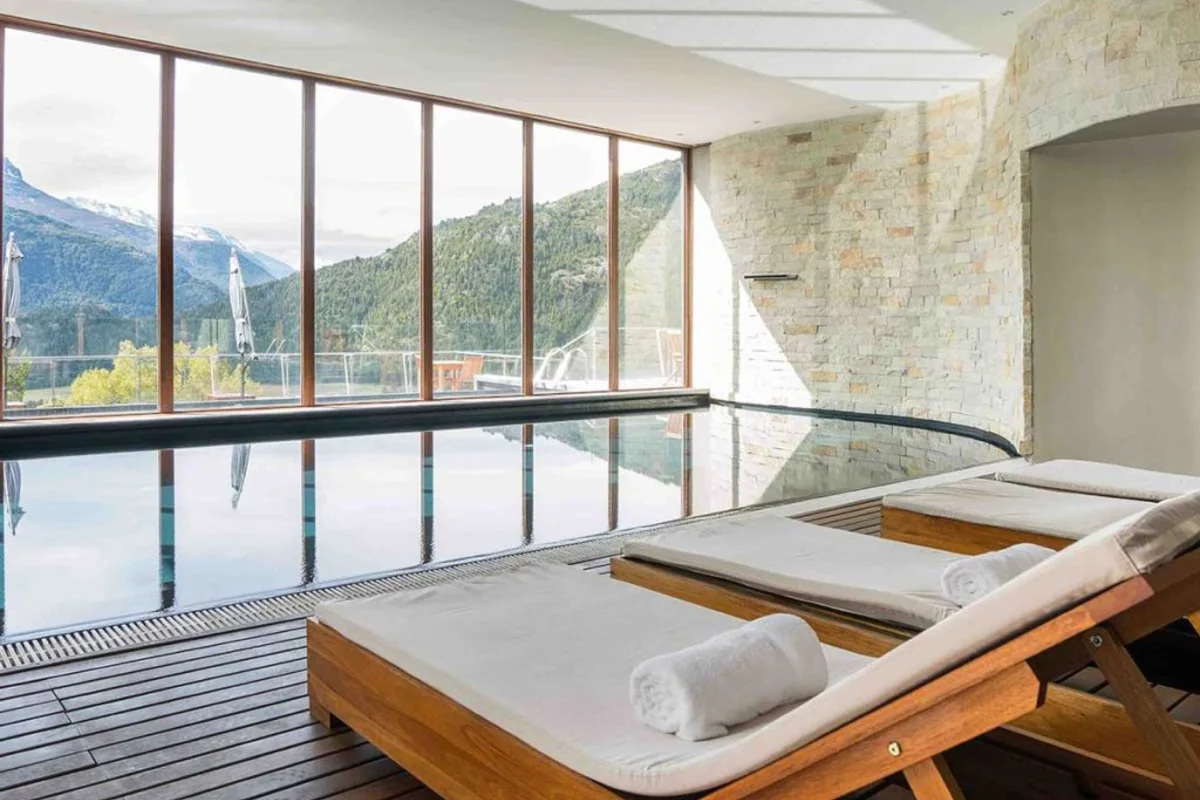
- Spa. An indoor heated pool with windows onto the Andes, an outdoor hot tub facing the valley, sauna, hammam and massage at the spa: just what your shoulders want after a day of casting.
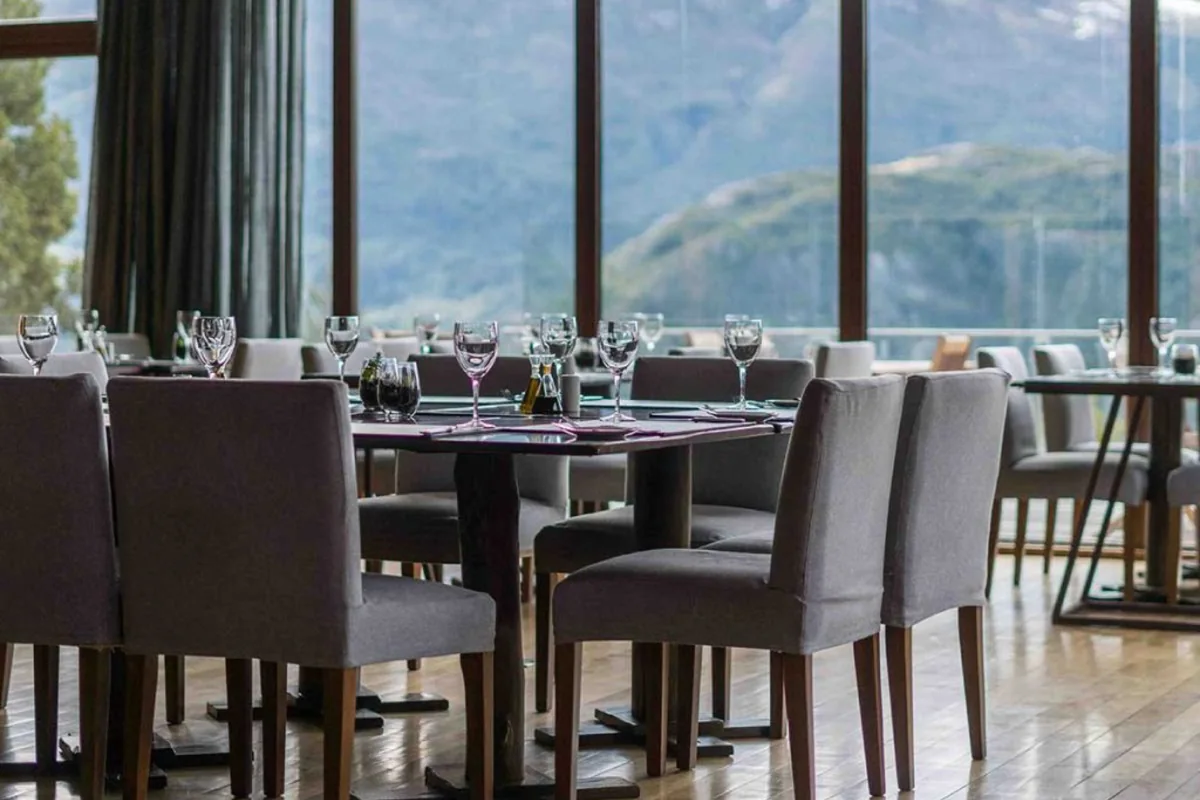
- Dining. Cooking built on the estate's organic garden and livestock, in a dining room looking over the valley. More on dining.
- Rafting. The same river has class IV–V rapids. If you are traveling with a non-angler, or want to see the river from another angle, read our guide to rafting the Futaleufú.
- Horseback riding and hiking on the old settlers' trails of the Espolón valley and in the Futaleufú Reserve.
A sample four nights with three days of fishing:
- Day 1 · Arrival. From Esquel or Chaitén. Afternoon at the spa, rigging up.
- Day 2 · Full day on the Futaleufú. A float with a riverside lunch.
- Day 3 · Half day of fishing, then something different. Fish in the morning; ride or raft in the afternoon.
- Day 4 · Half or full day, depending on the river and what you enjoyed most.
- Day 5 · Depart, or carry on to Lake Yelcho and the Carretera Austral.
Across the border
Futaleufú and Argentine Patagonia
Futaleufú is about 10 km (6 miles) from the border. On the other side are Trevelin, Esquel and Los Alerces National Park, another first-rate fishing region, and many anglers fish both on one trip. What to know:
- Two separate licenses. A Chilean license is not valid in Argentina, and vice versa. In Chubut the 2026–27 season opens on November 1 and runs to the first weekend of May 2027. Non-resident foreigners pay ARS 50,000 a day, ARS 140,000 for 10 days or ARS 280,000 for the season. A new 10-day permit for residents of neighboring countries, such as Chile, costs ARS 50,000.
- Same river, different rules. Inside Los Alerces, the Futaleufú (Río Grande) has its own season, a ban on boats, mandatory gear disinfection at the park entrance and a ban on felt-soled boots [VERIFY: 2026–27 dates in the National Parks regulations].
- Some waters stay open year-round, such as Lago Rosario near Trevelin.
How do they compare? Argentine Patagonia has more open, windier steppe rivers and a long tradition of fishing lodges. The Chilean side at Futaleufú is greener and more mountainous: native forest to the water's edge, turquoise water and a big river best fished from a boat. For a longer trip the two work well together. The Futaleufú border crossing is open from 8 a.m. to 7 p.m., and Esquel airport is 98 km (61 miles) from the lodge.
Access
Getting to Futaleufú to fish
- Via Argentina: fly into Esquel, then 98 km (61 miles) by road through Trevelin and the Futaleufú Pass.
- Via Chile: fly to Puerto Montt and take the bimodal ferry route to Chaitén, then 150 km (93 miles) by road; or take a small plane to Chaitén. Aerocord also runs charters to the Futaleufú airfield, 3 km (2 miles) from the lodge.
- Transfers: Uman Lodge arranges transfers from the Futaleufú airfield, Chaitén or Esquel. They are not included in the rate and should be booked at least 48 hours in advance.
If you are flying in a small plane, check the baggage allowance ahead of time and pack rods in a hard tube. Full details are on Getting here, and if you are driving, see our Carretera Austral guide.
Common questions
FAQ
When is fishing season in Futaleufú?
In Palena Province, which includes Futaleufú, salmonid season runs from November 1 to the first Sunday in May (Exempt Resolution 2,428/2025). For 2026–27, that is November 1, 2026 to May 2, 2027. Uman Lodge is open from November 7 to March 31.
Do I need a fishing license in Chile as a foreigner?
Yes. Every angler needs a Sernapesca recreational fishing license, and foreign visitors have no exemptions. You buy it online with your passport and it is emailed to you immediately.
How much is a Chile fishing license for foreigners?
In 2026: CLP 19,900 for a week, CLP 39,800 for a month and CLP 59,600 for a year, valid in fresh and salt water. Fees are reset every year in line with the UF, so they go up slightly in 2027.
Can I keep trout in Futaleufú?
No. Throughout Palena Province, trout and native fish must be released. You may keep one salmon a day (Atlantic, coho or chinook), and on the upper Futaleufú, from the border to the Sofía sector, everything goes back.
What species are in the Futaleufú River?
Mainly rainbow and brown trout, plus brook trout on the lower river and naturalized chinook salmon in the Futaleufú–Yelcho system.
What is the best time to fly fish Futaleufú?
Mid-January through late February for dry flies and the most settled weather. November and March are good months for streamers and big trout.
What rod should I bring for the Futaleufú?
A 9-ft 5- or 6-weight for dries and nymphs, and a 7-weight for streamers and windy days, with a floating line and a sink-tip.
Can I rent fishing gear at Uman Lodge?
Yes. Gear is not included in the trip, but rods, reels, flies, waders and boots are available to rent.
Do I need fishing experience to go out with Uman Lodge?
The minimum age is 16, and some prior experience is preferred. To get the most out of the day, you should be able to cast comfortably to 30–50 feet.
What is didymo and what should I do?
It is an invasive alga found in the Futaleufú and Espolón since 2010. Before you fish another river, strip off any visible algae, wash your gear in dish soap and let it dry for at least 48 hours. Don't wear felt soles.
Can I fish in Argentina with my Chilean license?
No. In Chubut you need a provincial permit, and inside Los Alerces National Park the National Parks rules also apply.
How do I get to Futaleufú to fish?
The shortest route is to fly into Esquel, Argentina, and drive 98 km (61 miles) to the lodge. From Chile, go via Chaitén (150 km, 93 miles) or take a charter to the Futaleufú airfield, 3 km (2 miles) from Uman.
Uman Lodge
A river to come back to
Fishing Futaleufú means fishing a big, clean river through native forest, with the Andes behind you and trout that go back in the water for next time. From Uman Lodge the river is at the foot of the cliff, and back at the lodge the spa, the estate's cooking and the terrace above the confluence are waiting. Send us your dates and we will plan your fishing days with you.
Sources
- Subpesca, Exempt Resolution 2,428 of 2025 (rules for Palena Province), and the Diario Oficial summary of November 4, 2025.
- Sernapesca, Recreational fishing seasons in Chile (Decree 320/1981) and 2026–27 season in Los Lagos.
- Sernapesca, How to get a recreational fishing license and 2026 license fees.
- Sernapesca, Didymo prevention. Subpesca, Technical report 1681 on didymo in the Espolón and Futaleufú.
- Ibarra et al. (2011), Chinook salmon juveniles in rivers and lakes of Chilean Patagonia, Gayana.
- Di Prinzio et al. (2015), Chinook salmon in the Futaleufú River, Environmental Biology of Fishes.
- Municipality of Futaleufú, Lonconao and El Espolón. Wikipedia, Route CH-231.
- Central Hidroeléctrica Futaleufú, History.
- Radio Chubut, 2026–27 permit fees. Canal 4 Esquel, 2026–27 season. Patagonian Freshwater Sport Fishing Regulations: Futaleufú or Grande River.
- Uman Lodge, Excursions, FAQ and Getting here.